

Why Ha Giang Loop Might Be the Best Addition to Your Upcoming Portfolio
For years, Ha Giang wasn’t really on most travelers’ radar. Sapa gets all the attention, Ha Long Bay is on every postcard, and somewhere in between, this stretch of far-northern Vietnam just… didn’t come up much. Then travelers started finding their way here – and once the phrase “Ha Giang Loop” started making the rounds, people got a little obsessed with the place. It’s now showing up on more wish lists than ever, and it’s exactly why we think it belongs in your catalog.
Let’s walk you through what makes this place work, and how you can offer it to your clients.
The land does something to travelers
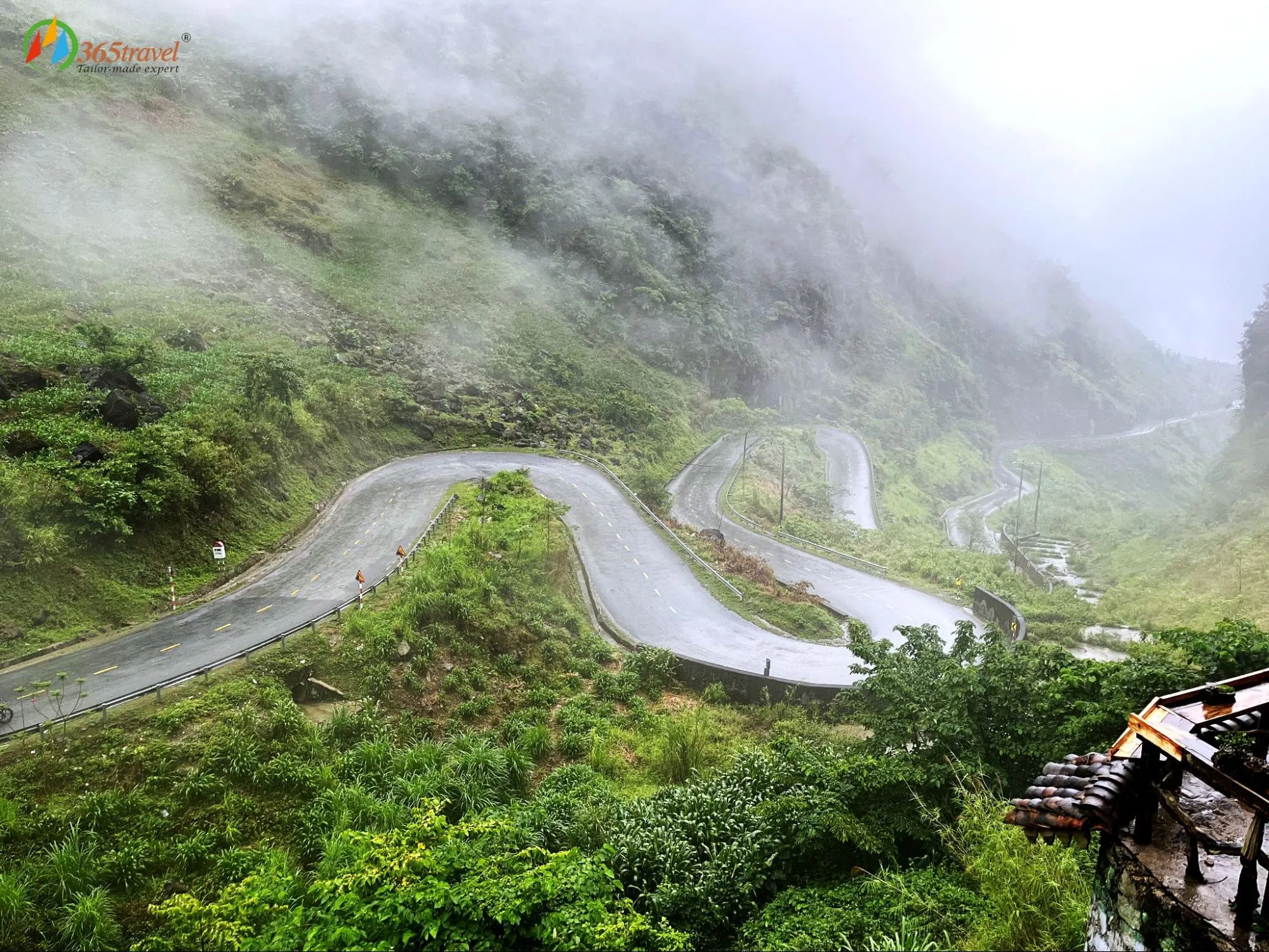
Driving – or riding, more on that shortly – through the Dong Van Karst Plateau, the road just keeps climbing. Limestone peaks stacked on top of each other for as far as one can see. Terraced fields carved into slopes that look too steep to farm, but somehow people do. Then, round a bend and the whole valley opens up below, and it’s clear why this is a UNESCO Global Geopark and not just “another mountain area.”
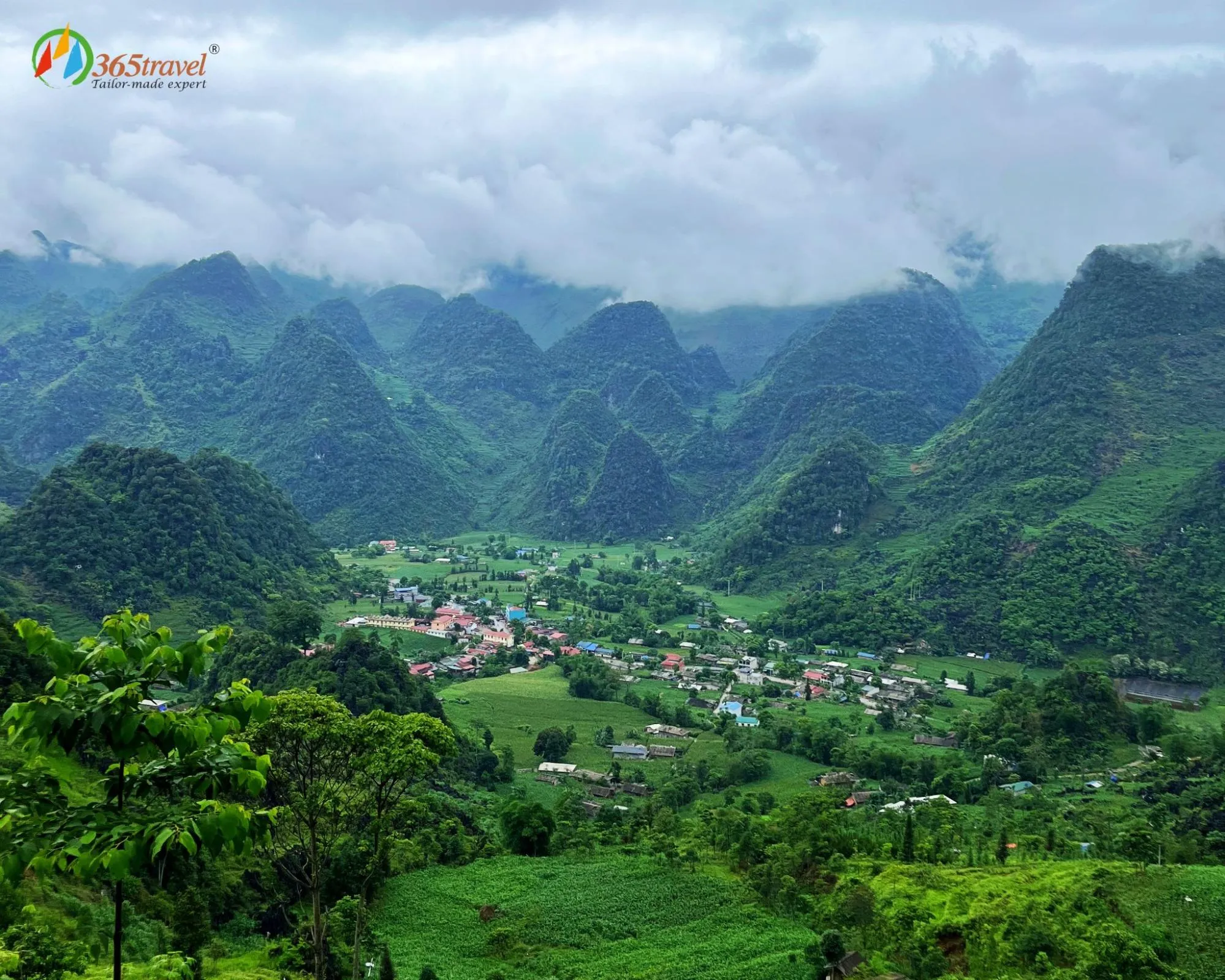
Ma Pi Leng Pass is the moment every guest talks about afterward, and it earns it. It’s one of Vietnam’s four legendary mountain passes, and standing at the viewpoint looking down at the Nho Que River – a thin ribbon of turquoise cutting through the Tu San Canyon – it’s easy to see why it’s called “the King of Passes.” No photo really does it justice, which is exactly the kind of thing that makes clients tell their friends about a trip.
Then there’s Lung Cu Flag Tower, marking the northernmost point of Vietnam – flag snapping in the wind, hills rolling off toward the border. It’s a small, quiet moment that tends to stay with people.
The stops that keep people talking
Ask anyone who’s done the loop what stuck with them most, and it’s rarely just the scenery – it’s a handful of specific stops that come up again and again.
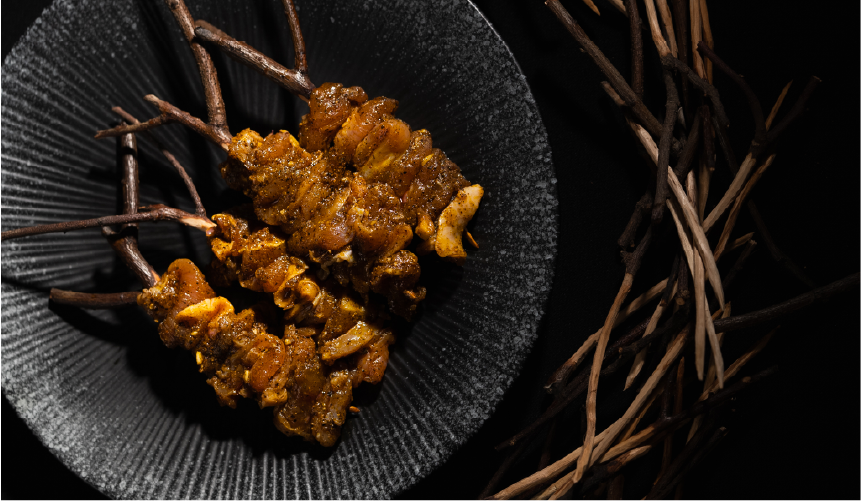
Dong Van Old Quarter is usually the first one people mention. Houses here are well over a hundred years old, built from stacked stone with heavy wooden shutters, and there’s an old French fort on the hill behind town that looks out over the whole valley. Time it around Sunday and you’ll catch the weekly market, one of the liveliest scenes on the entire loop – locals in traditional dress, pots of thắng cố simmering away, people catching up over rice wine after a week apart in the mountains.
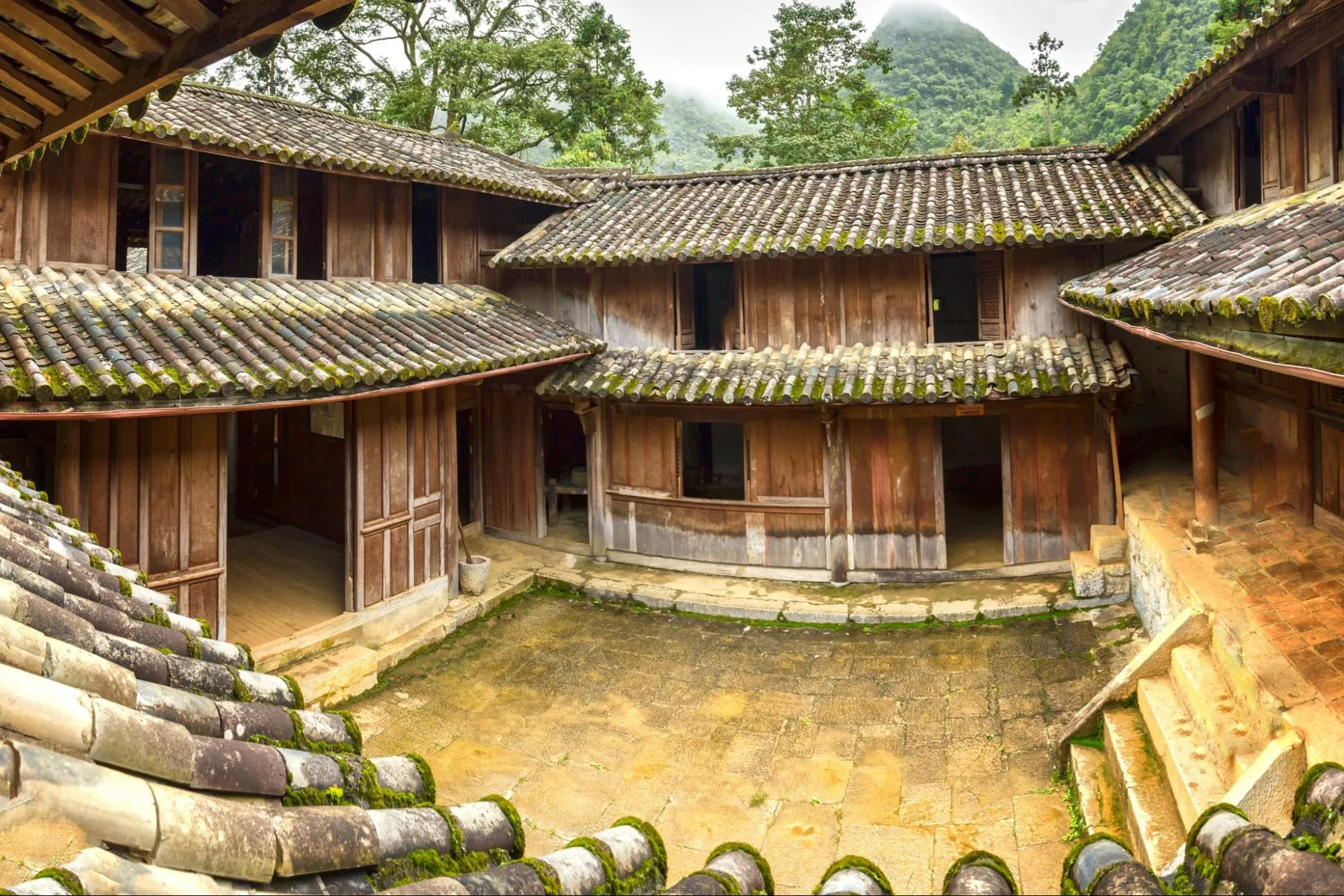
The H’mong King’s Palace in Sa Phin is the other one guests keep bringing up. It was built by a H’mong warlord clan that controlled the region’s opium trade in the early 20th century, and the building still carries that history – a striking mix of Chinese, French, and H’mong architectural styles that photographs beautifully and gives guides plenty to talk about.
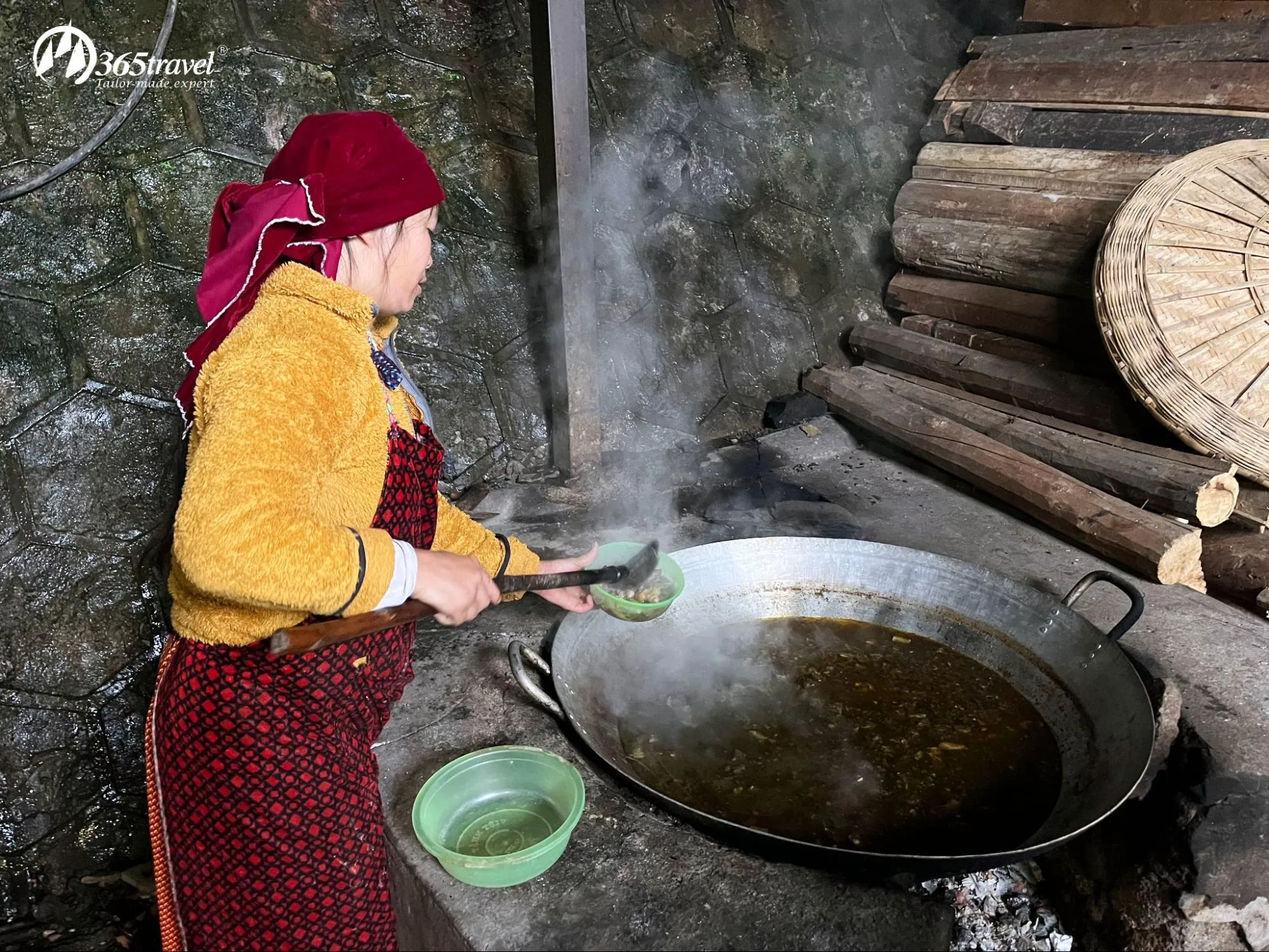
Meo Vac Market, also held on Sundays, is one of the largest ethnic markets in the province – worth building a day around if the itinerary allows, since this is where several different ethnic communities from the surrounding hills come together to trade.
And right before the Ma Pi Leng’s most dramatic viewpoints sits the Youth Volunteers Monument – a quieter, more reflective stop that commemorates the young laborers who spent years carving the “Happiness Road” out of the cliffside by hand in the 1960s. It’s the kind of stop that gives the scenery some real weight, and it’s worth a few extra minutes rather than rushing past it.
It’s the people, too
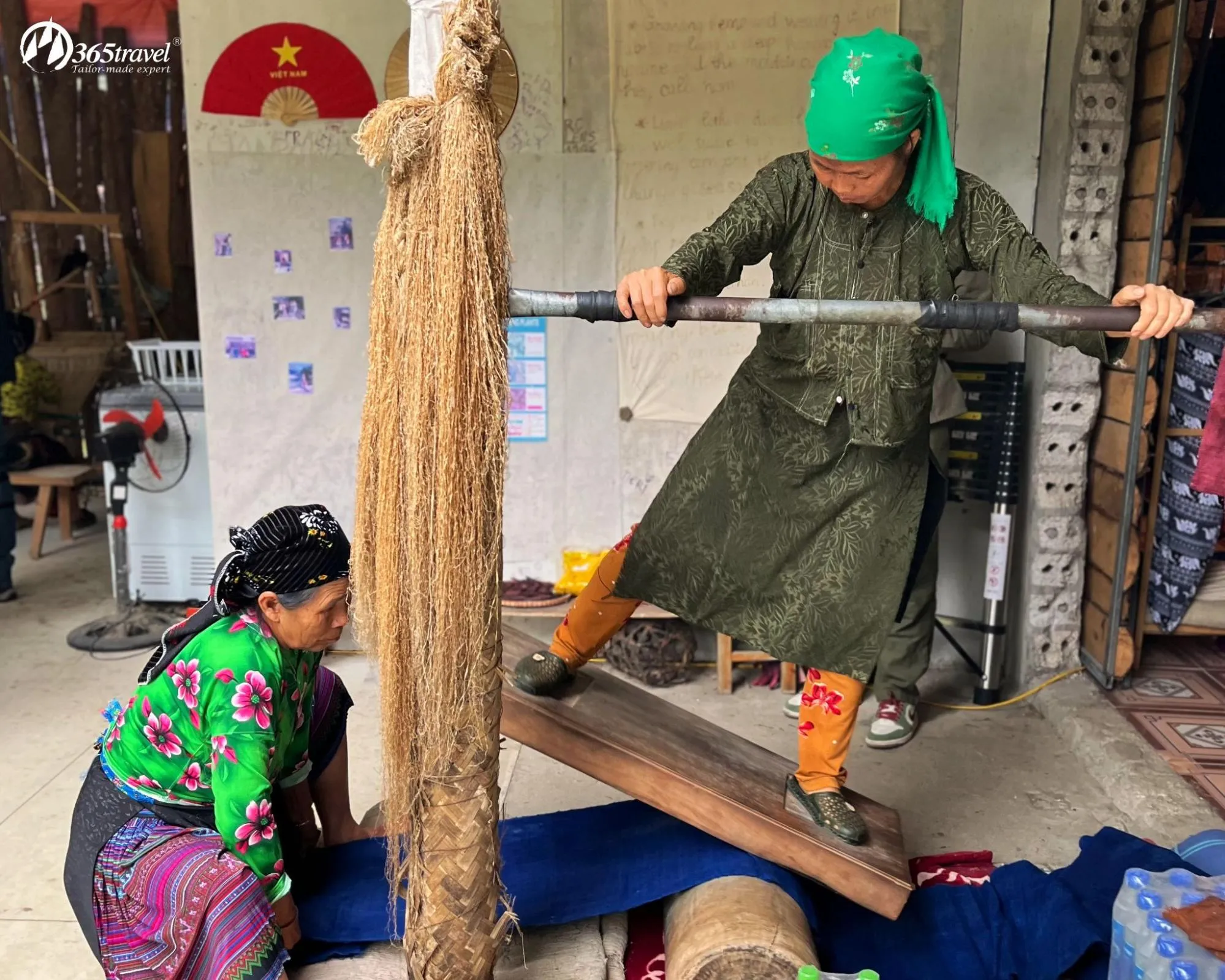
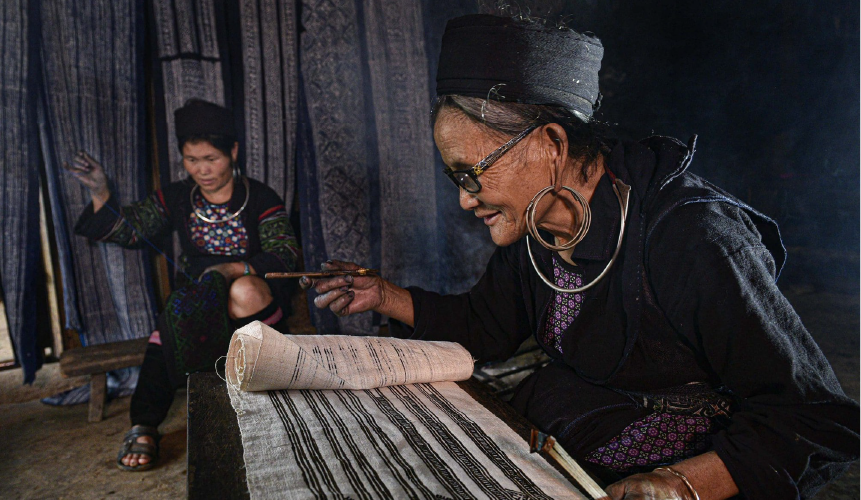
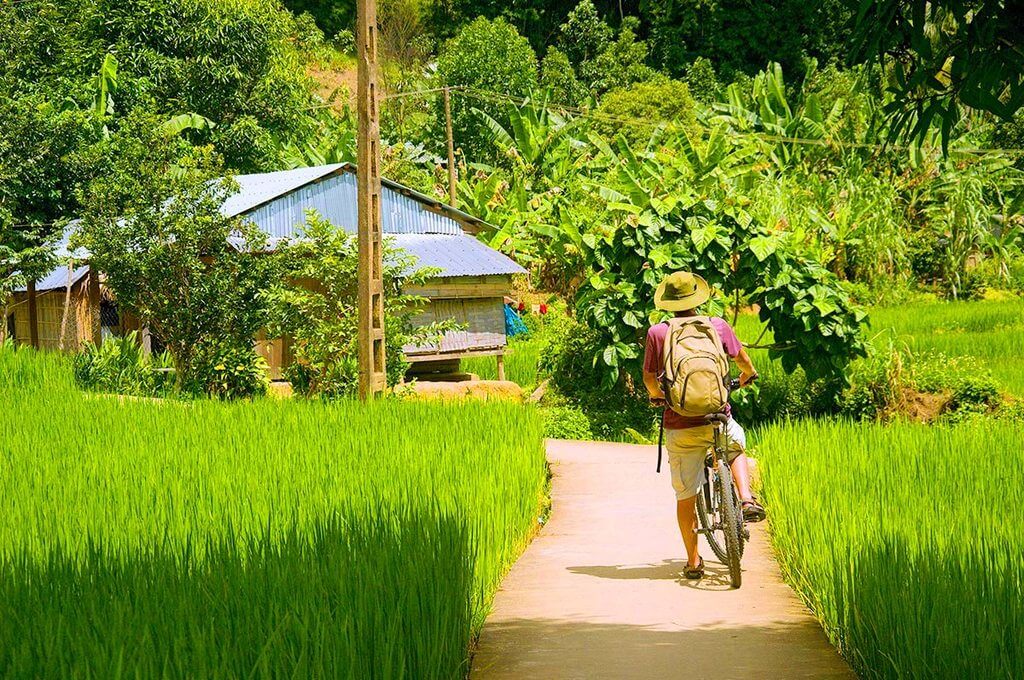
What sets Ha Giang apart from a lot of destinations isn’t only the scenery – it’s that life here hasn’t been rearranged around tourism. The H’mong, Tay, Lo Lo, and Dao communities across this region are simply living their daily lives. Guests pass through markets that are clearly for locals, not visitors. They might end up at a homestay where the family cooks what they’d normally cook. For clients who’ve done the well-worn routes before, this is the kind of destination that feels like being let in on something – and that’s a strong story for your sales team to tell.
Getting to Ha Giang from Hanoi
Ha Giang sits roughly 300km north of Hanoi, and this leg of the trip is worth planning around your client’s travel style, since it shapes the first impression of the whole journey:
- Sleeper bus, private cabin: about 6 hours overnight, with pickup from hotels in Hanoi’s Old Quarter between 7:30–8:00pm. Clients sleep through the drive and arrive rested the next morning – and it saves a hotel night, which is worth mentioning when clients are comparing prices.
- Limousine transfer: also about 6 hours, but during daylight – pickup around 3:00–3:30pm. A better fit for clients who’d rather arrive in the evening, settle into their hotel, and start the loop fresh the next morning rather than waking up straight into it.
- Private car / chauffeured vehicle: the most flexible choice for smaller groups or VIP clients, with the option to break up the drive with stops along the way.
- Helicopter: this is where the ultra-luxury product really earns its price tag – the same 300km, 6-hour drive becomes roughly 1 hour in the air.
Once your clients are on the ground, the loop itself covers another 300–350km depending on the exact route, which is why we always recommend budgeting the full 3 – 4 days rather than trying to compress it into two.
Best time to go
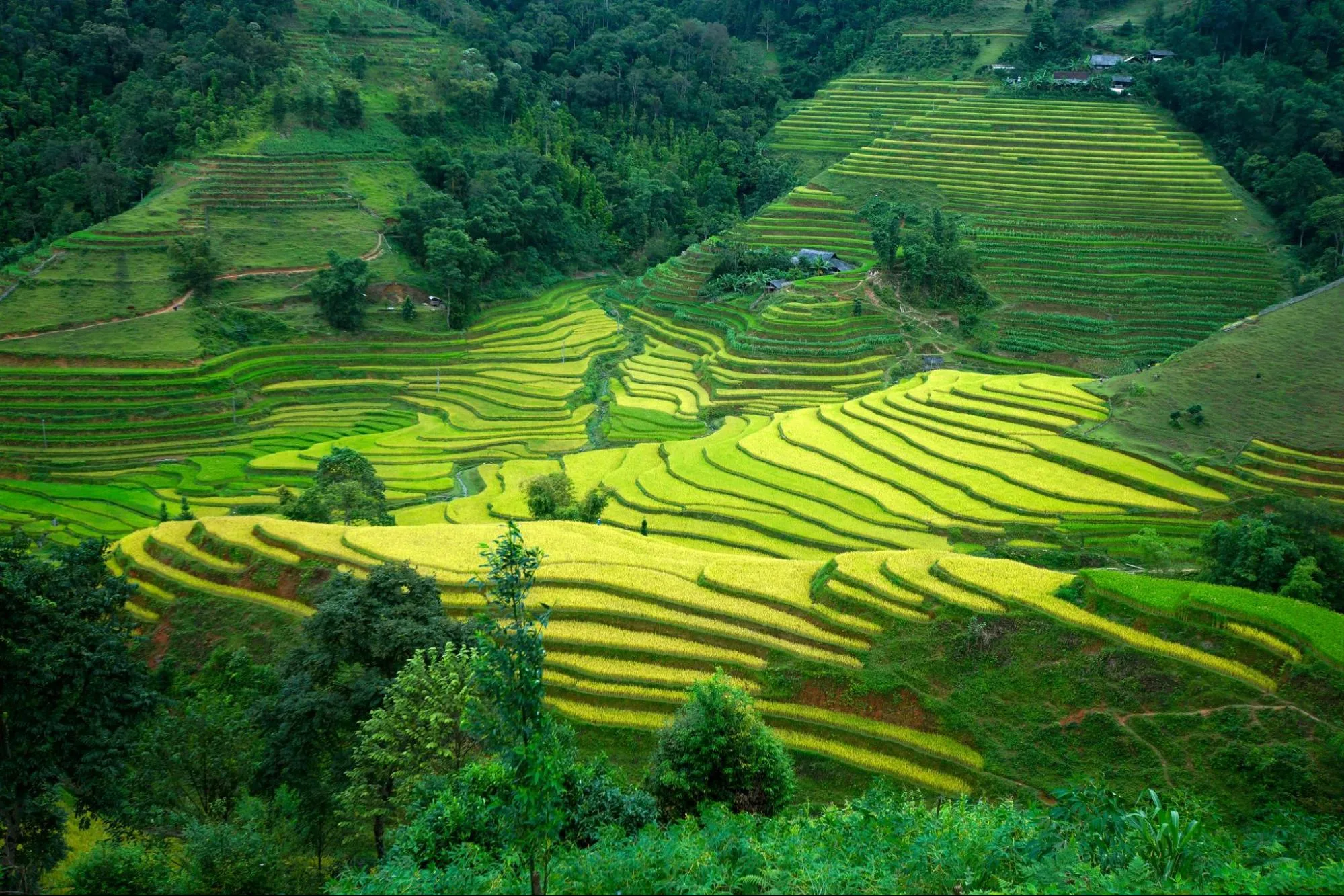
September through October is hard to beat – the rice terraces turn gold before harvest. Late October through November is buckwheat flower season. Broadly, November through April gives the driest, clearest roads, but cold weather. May through September brings lush, green landscapes, but also more rain and the occasional land slide and storm – worth knowing so you can set the right expectations with clients booking that time.
Where clients can stay?
There’s something for every budget along the loop, and it’s worth having a couple of named options ready for clients who want more comfort than a family homestay, or in case a particular homestay is fully booked. Here’s what we’d point your team to.
In Ha Giang city – the first and last night of most itineraries – Four Points and Pa’piu are both reliable brands, for luxury stay. Local hotel are also available.
In Dong Van, good alternatives to the standard homestay: Dong Van Cliffside House (about 700m from the old market), Dong Van Ville Du H’mong (about 650m from the market), and Ha Giang Hill (about 1.1km out). All three keep clients within easy walking distance of the old quarter for an evening stroll.
In Du Gia, Cheers Ecolodge Du Gia and Pachidua are both solid options for clients who want a bit more privacy and comfort without losing the village feel – a good fallback if the homestay experience isn’t the right match for a particular client.
Four ways to do Ha Giang Loop – one for every kind of client
This is really the heart of it for you: how your clients get around shapes the entire trip, and we run all four ways, so you can match the format to the traveler.
By vintage jeep, guests get that open-top, wind-in-your-face feeling, and the photos are unbeatable. It’s a strong fit for families or groups of friends who want adventure without anyone having to drive.
By private car, the ride is far smoother – a better fit for bigger groups, older travelers, or anyone who prefers comfort over adrenaline. They still see everything; just from a more relaxed seat.
On a motorbike, as an “Easy Rider” (with a local rider driving, for those who’d rather not ride themselves), guests get the most freedom – stopping wherever something catches their eye, lingering longer at a market, taking the smaller roads. It’s the choice to offer clients who want to feel like they’re really in the landscape, not just looking at it through a window.
And then there’s the option that tends to surprise people the most: by helicopter. It’s a single-day experience – roughly an hour in the air instead of a six-hour drive – with a perspective nothing else can match. This is the one to position for your top-tier clients: VIPs, and those looking for something genuinely exclusive.
Why Ha Giang belongs in your lineup?
What stays with most guests isn’t any single viewpoint, pass, or photo – it’s the feeling of being somewhere that hasn’t been smoothed out for visitors yet. Ha Giang still feels like a place, not a product, and that’s genuinely rare to offer right now. With four completely different ways to experience it, you’ve got a version of this trip for almost any client on your list.
If you’re ready to see how this fits your catalog, we can put together a sample proposal across all four formats, or set up a fam trip so your team can experience it firsthand.